Practice without pressure.
The Canadian Paediatric Society recommends following a child’s cues and avoiding pressure. That guidance informs the module about toilet refusal.
Read the toilet learning guidanceA self-paced course for parents and caregivers
They’ll pee on the potty. But poop? Only in a diaper.
Know what to say the next time they ask for a diaper, hide behind the sofa, or won’t sit. Then share the same plan with daycare or family.

Sound familiar?
Free lesson · Module 2
They’ve just peed in the potty. A moment later they bring you a diaper. Here’s one short exchange from Module 2 to try out loud.
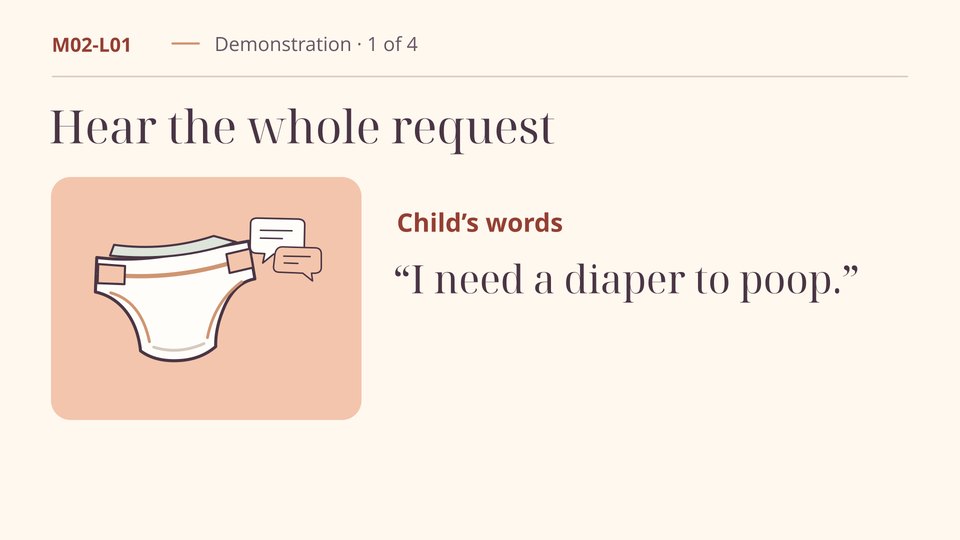
Try it out loud
They say“I need this one for poop.”
You could say“Yes, I’ll get your diaper.”
If you’ve already asked them to sit, try a reset. “I kept asking. You asked for your diaper. Here it is.” Say it once in your own words and picture what you’ll do next.
Get the full courseCourse curriculum
Open any module to see what you’ll work through. Use the course in order or jump to the situation you’re dealing with today.
 Figure out where you’re stuck
Walk through the last couple of times your child needed to poop. Note who was there, what they asked for and what happened next. Use that snapshot to choose a lesson and give the next caregiver a clear picture.
 “I need a diaper.” What do I say?
See how to keep that first reply short when the two of you have had this conversation all week. Practice the opening line in the sample, then write a version you and your partner would both feel comfortable saying out loud.
 When they sneak away to poop
Think through whether they’re asking for privacy and how they let you know. Get words for checking in without announcing what’s happening to the rest of the room.
 When they won’t sit on the potty
Break the bathroom routine into smaller moments. Write down which parts already feel familiar and what seems to make your child uneasy. Use those notes to decide what to talk about next.
 When you’re worried about pain or holding it in
Prepare for a conversation with your pediatrician. The observation sheet gives you a place for dates, signs of discomfort and questions so you can explain what you’re seeing.
 Get daycare and family on the same page
Fill in a one-page note with what your child says, which words you’re using at home and what you’d like the caregiver to report back. There’s space for anything different about the daycare routine.
 When the plan falls apart for a few days
After a trip, illness or a disruption at home, revisit what changed and which parts of the routine are still familiar. Leave with one thing to discuss together before the next diaper request.
Our sources
The course draws on published pediatric guidance on toilet learning and on what to notice when a child is uncomfortable.
The Canadian Paediatric Society recommends following a child’s cues and avoiding pressure. That guidance informs the module about toilet refusal.
Read the toilet learning guidanceThe National Institute of Diabetes and Digestive and Kidney Diseases explains how a painful bowel movement can lead a child to hold it in. The observation sheet helps you describe what you’re seeing to your child’s pediatrician.
Read the NIDDK guidanceIncluded with the lessons
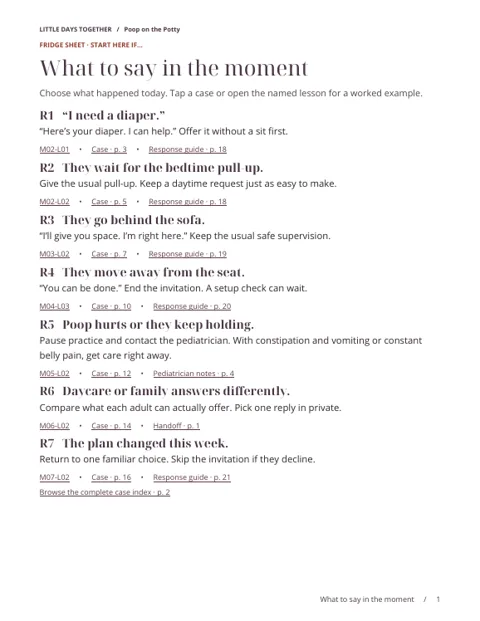
Find the right lesson and a short line you can try when they ask, hide or refuse to sit.
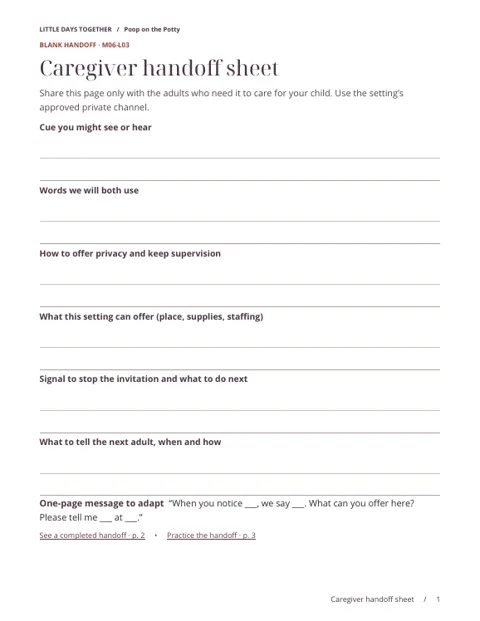
A single page for daycare, grandparents and anyone else helping out.
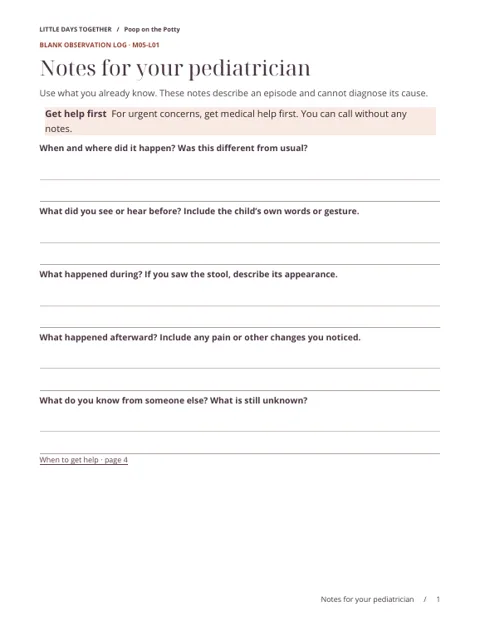
Capture the timing, what your child tells you and the questions you want to ask.
Course help
Parents and caregivers whose toddler already pees on the potty and still asks for a diaper, hides or refuses to sit when it’s time to poop.
Start with the situation you’re dealing with today. The module list helps you find the right lesson when you need to come back to it.
Talk to your child’s pediatrician about pain, constipation or persistent withholding. Read the American Academy of Pediatrics’ parent guide.
It’s a written course with illustrations, decision maps, worked examples and printable tools. You can read it on your phone or computer.
Work through a module at a time, or open one lesson when you need it. The reading and exercises are self-paced, so time varies with how many scenarios and activities you do. Practice with your child happens separately.
After Stripe confirms your payment, you can open the lessons and download the printables from your order confirmation page.
21 illustrated lessons, seven practice exercises and three printable tools.